
Our CEO, Mr. Albertus Prasetyo Heru Nugroho explaining about investment scheme during meeting at our Office
Japan is one of the most famous tourist destinations in the world. The food tastes good and our body sense is pampered by Omotenashi (Japanese hospitality). High safety standards and high product & service quality are the factors that make tourists want to come back to Japan again. Before Covid-19 pandemic, there was an increase of tourists from Indonesia who went to Japan.
But, do you ever want to have a business, company (SPC), or property in Japan? One of the famous stereotypes about Japan is that the country is expensive. We think that Japanese property prices can reach 4 or 5 times more expensive compared to Indonesia. Don’t worry! Have you ever heard of Yoshinoya? Yoshinoya prices in Indonesia and Japan didn’t change that much. Japan tends to experience deflation so Japanese goods prices in the last 20 years didn’t change much. This includes property price.
Other than being expensive, we also think about “dumping politics”. We learn in school that Japan is protective if it’s about domestic products. Regarding export and import, there are still some insentif given to Japanese manufacturers. But the restrictions are reduced because of Globalization, free market, and EPA (Economic Partnership Agreement). How about infestation? Indonesian government restricts foreign infestation by enacting negative sounding laws. This makes us think that Japan is limiting foreign investment. The answer is NO. Japan didn’t have an Investment Coordinating Board (BKPM). This makes it easy to acquire SPC (Special Purpose Company) and foreigners can buy property in Japan. Even companies who are owned by foreign investment also acquire the same rights like Japanese local companies: getting pandemic insentif and bank loan.
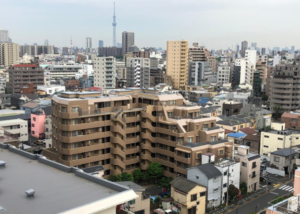
General view of housing areas with many Apartments around Tokyo (Arakawa-Ku), Japan
Let’s say you have 1 billion rupiah. You can make a company in Japan with your name and we can go to Japanese bank to ask for a loan. Loan to Value for first time loans are 66%, but if you already have a track record, the Loan to Value can reach 90%. You can buy an apartment worth 3 (three) Billion Rupiah for just 1 Billion because the bank gave you 2 Billion worth of loan with a tenure of 20 years to 30 years. The loan interest is around 1.5% to 2.5%. Usually if you rent a property in Japan the ROI can reach around 6% to 12%. Every year the primary returns are 2 Billion divided by 20 years equal to 100 Million Rupiah, with interest 40 Million Rupiah. Your income can reach 240 Million Rupiah/Year. You can have free cash equal to 100 Million Rupiah.
With the track record before and another 1 Billion Rupiah, you can inject the cash to your Japanese Company and take a loan with LTV 75%. Now you can buy another property worth 4 (four) Billion Rupiah with only 1 Billion Rupiah and the ROI is the same (around 8%). This way you can earn 320 Million rupiah per year. If you don’t exploit the bank and buy with hard cash, the ROI will be bigger and because the property is under your company, if you need funds, you can use it as a collateral to the Bank and bring the cash to Indonesia.
Apabila anda ingin memberikan donasi, anda dapat menghubungi Soken Kitchen via:
Hotline: +62 899-8953-135
Email: kunto@indonesiasoken.com
Authored by : Fitri Aulia | 22 December 2020
Recent Property Development

The Covid-19 pandemic has dealt a quite severe blow to the property business sector in 2020. During the PSBB period, business activities were very sluggish and it can be said that some business actors suffered severe losses.
However, entering the new normal period, the economic activity in several sectors including property has begun to revive from the previous period. The role of the government triggers the revival of Indonesia’s property business activities.
Government Stimulus
The assistance provided by the government is in the form of subsidies or incentives for interest subsidies to debtors of public housing credit (KPR), which is contained in the Minister of Finance Regulation (PMK) Number 138 / PMK.05 / 2020 and amendments to PMK 85 / PMK.05 / 2020 regarding the guidelines for providing interest subsidies in the effort to implement the National Economic Recovery program.
In early March 2020, the Government decided to increase the allocation of housing financing assistance by IDR 1.5 trillion for Low-Income Communities (MBR). This was stated by the Director General of Infrastructure Financing of the Ministry of Public Works and Public Housing (PUPR) Eko Djoeli Heripoerwanto in a webinar, Wednesday (29/7/2020).
In addition, the Government also has Bank BTN as their partner-collaboration to implement their OMH Program aimed at Low-Income Communities (MBR) with low interest rates and low installments for the purchase of a prosperous tread house and a welfare apartment.
Bank BTN noted, in 2015 they have provided housing financing assistance totaling 474,099 units. Then in 2016 as many as 595,540 units, in 2017 to 666,806 units, in 2018 to 755,093 units, and in 2019 to 735,749 units.
As of September 2020, BTN has provided home ownership credit support (KPR) of 93,448 units which cost as much as Rp. 15.6 trillion. These support provided by BTN is significant for the survival of the business property sector.
BTN commitment on supporting business property has not slackened. In fact, during the pandemic, BTN continuously provides support for the government program.The distribution of subsidized KPR is still a mainstay of BTN for the One Million Houses program.

Source : Bank BTN (visit : https://www.btn.co.id/id/Conventional/Product-Links/Produk-BTN/Kredit-Konsumer/Pinjaman-Bangunan/KPR-BTN-Subsidi)
Positive Trend in Q3 2020
There is a positive trend during Q3 2020 after it drastically dropped earlier in the year, indicates there is potential for the revival of Commercial Property Demand in Q4 2020 and the next Q1 2021.

Source : Bank Indonesia
Hotels and convention halls are two sectors whose demand has risen quite drastically in the Q3 after falling badly in the previous quarter. This demonstrates positive potential for its development in the future. Meanwhile, the demand of apartment remains low and still struggles to revive until now.
Growth of Commercial Property Demand in Jabodetabek
Overall in Jabodetabek, the commercial property sector also experienced a positive increase during Q3 2020.
In Jakarta, all commercial property demands show positivism with hotels being the most prominent in their development at Q3 2020. After previously shows a negative number, the total index in Q3 has at least increased to be positive.

Source : Bank Indonesia
Meanwhile, the growth in the total commercial property index jumped drastically in Bogor, Depok and Bekasi. Same case with Jakarta, its hotel sector are also the most prominent in reviving, at least in the Q3 2020.

Source : Bank Indonesia
As we can see on charts above, the hotel segment shows a great improvement in demand. This was driven by various kinds of promotions offered by hotels to adapt in this situation such as providing huge discount, staycation packages, working from hotels offer, and wedding reception packages.
Why Hotels?
As Indonesia gradually eases lockdown restrictions, the hotel occupancy rates across the country including Jakarta, have slowly started to pick up. However this is not without several efforts and sacrifices driven by people in the hotels sector to improve and revive the hospitality business sector in Indonesia.
To get through this hard times, efficiency and innovation are the main keys. Therefore, there are several trends created specifically to adapt to this era. Hotels competing with each other to offer a flood of discounts. To further intensify its sales strategy, there are several e-commerce platforms that is becoming a great place to advertise rooms and staycation packages, such as Traveloka. The Buy Now Stay Later also sticks to this trend.

Hotels discounts on Traveloka (Source : Traveloka)
Another new trend is the Work From Hotel (WFH). As you might know, the abbreviation of WFH was initially stands for Work From Home. To connect the dots, Working From Hotel then exist and created because there are more and more office workers are getting bored with the atmosphere of their house and desperate to look for a new atmosphere. It’s a trend where hotels prepare rooms, complete with equipment and facilities to work (e.g : Wi-Fi , stationer, and free printing facilities,etc).

Source : Instagram @harrisfxsudirman and @arunasenggigi
During the transitional PSBB period, indoor wedding receptions are allowed to be held again after previously was banned temporarily due to the massive increase of the Covid-19 spread. This becomes the opportunity that triggers the revival for the hotel business.
However, this permission is also accompanied by the requirement to fulfill and comply with the health protocols made by the government. These includes the limitation of attendees to a maximum of 25 percent of normal capacity. Then, the seating distance for visitors is set at least 1.5 meters. Visitors are also prohibited from passing by or changing seats. The eating and drinking utensils must be sterilized, while the serving of food is prohibited from using a buffet. Last but not least, the wedding staffs are required to wear a mask, face shield and gloves.
One of the breakthrough in this trend was the make of “Virtual Wedding” ever since June 2020. As this was the case held by The Sunan Hotel Solo, which offer a virtual wedding service package for 44.5 million. The event is only attended by the couple and their family members, meanwhile guests are able to attend the wedding virtually through various platforms such as Zoom, YouTube, Facebook and Instagram, while enjoying food sent by the hotel to their residences.

Source: The Sunan Hotels Solo
Finally, we might conclude that the property business in Indonesia has the potential to develop more despite the massive impact it has taken from pandemic outburst. Combining the stakeholders effort and the government’s support to stimulate this sector are expected to help revive the business sector in the future.
References
Bank Indonesia. (2020). Perkembangan Properti Komersial (PPKOM).
Kementerian Pekerjaan Umum dan Perumahan Rakyat. (2020, November 3). Tingkatkan Kepemilikan Hunian Layak, Realisasi Program Sejuta Rumah Hingga Akhir Oktober 2020 Capai 601.637 Unit. Retrieved from https://www.pu.go.id/berita/view/18970/tingkatkan-kepemilikan-hunian-layak-realisasi-program-sejuta-rumah-hingga-akhir-oktober-2020-capai-601-637-unit
Kementerian Pekerjaan Umum dan Perumahan Rakyat . (2020, January 3). Capaian Pembangunan Rumah Tembus 1,25 Juta Unit. Retrieved from https://perumahan.pu.go.id/berita/view/227/capaian-pembangunan-rumah-tembus-1-25-juta-unit
Kompas. (2020, July 29). Alokasi Tambahan Rp 1,5 Triliun untuk Perumahan Terkait 3 Program. Retrieved from https://properti.kompas.com/read/2020/07/29/191334021/alokasi-tambahan-rp-15-triliun-untuk-perumahan-terkait-3-program?page=all
BUMN inc. (2020). Target Penyaluran KPR Bank BTN Naik Menjadi 300.000 Unit Per Tahun. Retrieved from http://bumninc.com/target-penyaluran-kpr-bank-btn-naik-menjadi-300-000-unit-per-tahun/?more=2
Authored by : Fitri Aulia | 22 December 2020
Recent Property Development
The Covid-19 pandemic has dealt a quite severe blow to the property business sector in 2020. During the PSBB period, business activities were very sluggish and it can be said that some business actors suffered severe losses.
However, entering the new normal period, the economic activity in several sectors including property has begun to revive from the previous period. The role of the government triggers the revival of Indonesia’s property business activities.
Government Stimulus
The assistance provided by the government is in the form of subsidies or incentives for interest subsidies to debtors of public housing credit (KPR), which is contained in the Minister of Finance Regulation (PMK) Number 138 / PMK.05 / 2020 and amendments to PMK 85 / PMK.05 / 2020 regarding the guidelines for providing interest subsidies in the effort to implement the National Economic Recovery program.
In early March 2020, the Government decided to increase the allocation of housing financing assistance by IDR 1.5 trillion for Low-Income Communities (MBR). This was stated by the Director General of Infrastructure Financing of the Ministry of Public Works and Public Housing (PUPR) Eko Djoeli Heripoerwanto in a webinar, Wednesday (29/7/2020).
In addition, the Government also has Bank BTN as their partner-collaboration to implement their OMH Program aimed at Low-Income Communities (MBR) with low interest rates and low installments for the purchase of a prosperous tread house and a welfare apartment.
Bank BTN noted, in 2015 they have provided housing financing assistance totaling 474,099 units. Then in 2016 as many as 595,540 units, in 2017 to 666,806 units, in 2018 to 755,093 units, and in 2019 to 735,749 units.
As of September 2020, BTN has provided home ownership credit support (KPR) of 93,448 units which cost as much as Rp. 15.6 trillion. These support provided by BTN is significant for the survival of the business property sector.
BTN commitment on supporting business property has not slackened. In fact, during the pandemic, BTN continuously provides support for the government program.The distribution of subsidized KPR is still a mainstay of BTN for the One Million Houses program.
Source : Bank BTN (visit : https://www.btn.co.id/id/Conventional/Product-Links/Produk-BTN/Kredit-Konsumer/Pinjaman-Bangunan/KPR-BTN-Subsidi)
Positive Trend in Q3 2020
There is a positive trend during Q3 2020 after it drastically dropped earlier in the year, indicates there is potential for the revival of Commercial Property Demand in Q4 2020 and the next Q1 2021.
Source : Bank Indonesia
Hotels and convention halls are two sectors whose demand has risen quite drastically in the Q3 after falling badly in the previous quarter. This demonstrates positive potential for its development in the future. Meanwhile, the demand of apartment remains low and still struggles to revive until now.
Growth of Commercial Property Demand in Jabodetabek
Overall in Jabodetabek, the commercial property sector also experienced a positive increase during Q3 2020.
In Jakarta, all commercial property demands show positivism with hotels being the most prominent in their development at Q3 2020. After previously shows a negative number, the total index in Q3 has at least increased to be positive.
Source : Bank Indonesia
Meanwhile, the growth in the total commercial property index jumped drastically in Bogor, Depok and Bekasi. Same case with Jakarta, its hotel sector are also the most prominent in reviving, at least in the Q3 2020.
Source : Bank Indonesia
As we can see on charts above, the hotel segment shows a great improvement in demand. This was driven by various kinds of promotions offered by hotels to adapt in this situation such as providing huge discount, staycation packages, working from hotels offer, and wedding reception packages.
Why Hotels?
As Indonesia gradually eases lockdown restrictions, the hotel occupancy rates across the country including Jakarta, have slowly started to pick up. However this is not without several efforts and sacrifices driven by people in the hotels sector to improve and revive the hospitality business sector in Indonesia.
To get through this hard times, efficiency and innovation are the main keys. Therefore, there are several trends created specifically to adapt to this era. Hotels competing with each other to offer a flood of discounts. To further intensify its sales strategy, there are several e-commerce platforms that is becoming a great place to advertise rooms and staycation packages, such as Traveloka. The Buy Now Stay Later also sticks to this trend.
Hotels discounts on Traveloka (Source : Traveloka)
Another new trend is the Work From Hotel (WFH). As you might know, the abbreviation of WFH was initially stands for Work From Home. To connect the dots, Working From Hotel then exist and created because there are more and more office workers are getting bored with the atmosphere of their house and desperate to look for a new atmosphere. It’s a trend where hotels prepare rooms, complete with equipment and facilities to work (e.g : Wi-Fi , stationer, and free printing facilities,etc).
Source : Instagram @harrisfxsudirman and @arunasenggigi
During the transitional PSBB period, indoor wedding receptions are allowed to be held again after previously was banned temporarily due to the massive increase of the Covid-19 spread. This becomes the opportunity that triggers the revival for the hotel business.
However, this permission is also accompanied by the requirement to fulfill and comply with the health protocols made by the government. These includes the limitation of attendees to a maximum of 25 percent of normal capacity. Then, the seating distance for visitors is set at least 1.5 meters. Visitors are also prohibited from passing by or changing seats. The eating and drinking utensils must be sterilized, while the serving of food is prohibited from using a buffet. Last but not least, the wedding staffs are required to wear a mask, face shield and gloves.
One of the breakthrough in this trend was the make of “Virtual Wedding” ever since June 2020. As this was the case held by The Sunan Hotel Solo, which offer a virtual wedding service package for 44.5 million. The event is only attended by the couple and their family members, meanwhile guests are able to attend the wedding virtually through various platforms such as Zoom, YouTube, Facebook and Instagram, while enjoying food sent by the hotel to their residences.
Source: The Sunan Hotels Solo
Finally, we might conclude that the property business in Indonesia has the potential to develop more despite the massive impact it has taken from pandemic outburst. Combining the stakeholders effort and the government’s support to stimulate this sector are expected to help revive the business sector in the future.
References
Bank Indonesia. (2020). Perkembangan Properti Komersial (PPKOM).
Kementerian Pekerjaan Umum dan Perumahan Rakyat. (2020, November 3). Tingkatkan Kepemilikan Hunian Layak, Realisasi Program Sejuta Rumah Hingga Akhir Oktober 2020 Capai 601.637 Unit. Retrieved from https://www.pu.go.id/berita/view/18970/tingkatkan-kepemilikan-hunian-layak-realisasi-program-sejuta-rumah-hingga-akhir-oktober-2020-capai-601-637-unit
Kementerian Pekerjaan Umum dan Perumahan Rakyat . (2020, January 3). Capaian Pembangunan Rumah Tembus 1,25 Juta Unit. Retrieved from https://perumahan.pu.go.id/berita/view/227/capaian-pembangunan-rumah-tembus-1-25-juta-unit
Kompas. (2020, July 29). Alokasi Tambahan Rp 1,5 Triliun untuk Perumahan Terkait 3 Program. Retrieved from https://properti.kompas.com/read/2020/07/29/191334021/alokasi-tambahan-rp-15-triliun-untuk-perumahan-terkait-3-program?page=all
BUMN inc. (2020). Target Penyaluran KPR Bank BTN Naik Menjadi 300.000 Unit Per Tahun. Retrieved from http://bumninc.com/target-penyaluran-kpr-bank-btn-naik-menjadi-300-000-unit-per-tahun/?more=2
Authored by : Fitri Aulia | 22 December 2020
Recent Property Development
The Covid-19 pandemic has dealt a quite severe blow to the property business sector in 2020. During the PSBB period, business activities were very sluggish and it can be said that some business actors suffered severe losses.
However, entering the new normal period, the economic activity in several sectors including property has begun to revive from the previous period. The role of the government triggers the revival of Indonesia’s property business activities.
Government Stimulus
The assistance provided by the government is in the form of subsidies or incentives for interest subsidies to debtors of public housing credit (KPR), which is contained in the Minister of Finance Regulation (PMK) Number 138 / PMK.05 / 2020 and amendments to PMK 85 / PMK.05 / 2020 regarding the guidelines for providing interest subsidies in the effort to implement the National Economic Recovery program.
In early March 2020, the Government decided to increase the allocation of housing financing assistance by IDR 1.5 trillion for Low-Income Communities (MBR). This was stated by the Director General of Infrastructure Financing of the Ministry of Public Works and Public Housing (PUPR) Eko Djoeli Heripoerwanto in a webinar, Wednesday (29/7/2020).
In addition, the Government also has Bank BTN as their partner-collaboration to implement their OMH Program aimed at Low-Income Communities (MBR) with low interest rates and low installments for the purchase of a prosperous tread house and a welfare apartment.
Bank BTN noted, in 2015 they have provided housing financing assistance totaling 474,099 units. Then in 2016 as many as 595,540 units, in 2017 to 666,806 units, in 2018 to 755,093 units, and in 2019 to 735,749 units.
As of September 2020, BTN has provided home ownership credit support (KPR) of 93,448 units which cost as much as Rp. 15.6 trillion. These support provided by BTN is significant for the survival of the business property sector.
BTN commitment on supporting business property has not slackened. In fact, during the pandemic, BTN continuously provides support for the government program.The distribution of subsidized KPR is still a mainstay of BTN for the One Million Houses program.
Source : Bank BTN (visit : https://www.btn.co.id/id/Conventional/Product-Links/Produk-BTN/Kredit-Konsumer/Pinjaman-Bangunan/KPR-BTN-Subsidi)
Positive Trend in Q3 2020
There is a positive trend during Q3 2020 after it drastically dropped earlier in the year, indicates there is potential for the revival of Commercial Property Demand in Q4 2020 and the next Q1 2021.
Source : Bank Indonesia
Hotels and convention halls are two sectors whose demand has risen quite drastically in the Q3 after falling badly in the previous quarter. This demonstrates positive potential for its development in the future. Meanwhile, the demand of apartment remains low and still struggles to revive until now.
Growth of Commercial Property Demand in Jabodetabek
Overall in Jabodetabek, the commercial property sector also experienced a positive increase during Q3 2020.
In Jakarta, all commercial property demands show positivism with hotels being the most prominent in their development at Q3 2020. After previously shows a negative number, the total index in Q3 has at least increased to be positive.
Source : Bank Indonesia
Meanwhile, the growth in the total commercial property index jumped drastically in Bogor, Depok and Bekasi. Same case with Jakarta, its hotel sector are also the most prominent in reviving, at least in the Q3 2020.
Source : Bank Indonesia
As we can see on charts above, the hotel segment shows a great improvement in demand. This was driven by various kinds of promotions offered by hotels to adapt in this situation such as providing huge discount, staycation packages, working from hotels offer, and wedding reception packages.
Why Hotels?
As Indonesia gradually eases lockdown restrictions, the hotel occupancy rates across the country including Jakarta, have slowly started to pick up. However this is not without several efforts and sacrifices driven by people in the hotels sector to improve and revive the hospitality business sector in Indonesia.
To get through this hard times, efficiency and innovation are the main keys. Therefore, there are several trends created specifically to adapt to this era. Hotels competing with each other to offer a flood of discounts. To further intensify its sales strategy, there are several e-commerce platforms that is becoming a great place to advertise rooms and staycation packages, such as Traveloka. The Buy Now Stay Later also sticks to this trend.
Hotels discounts on Traveloka (Source : Traveloka)
Another new trend is the Work From Hotel (WFH). As you might know, the abbreviation of WFH was initially stands for Work From Home. To connect the dots, Working From Hotel then exist and created because there are more and more office workers are getting bored with the atmosphere of their house and desperate to look for a new atmosphere. It’s a trend where hotels prepare rooms, complete with equipment and facilities to work (e.g : Wi-Fi , stationer, and free printing facilities,etc).
Source : Instagram @harrisfxsudirman and @arunasenggigi
During the transitional PSBB period, indoor wedding receptions are allowed to be held again after previously was banned temporarily due to the massive increase of the Covid-19 spread. This becomes the opportunity that triggers the revival for the hotel business.
However, this permission is also accompanied by the requirement to fulfill and comply with the health protocols made by the government. These includes the limitation of attendees to a maximum of 25 percent of normal capacity. Then, the seating distance for visitors is set at least 1.5 meters. Visitors are also prohibited from passing by or changing seats. The eating and drinking utensils must be sterilized, while the serving of food is prohibited from using a buffet. Last but not least, the wedding staffs are required to wear a mask, face shield and gloves.
One of the breakthrough in this trend was the make of “Virtual Wedding” ever since June 2020. As this was the case held by The Sunan Hotel Solo, which offer a virtual wedding service package for 44.5 million. The event is only attended by the couple and their family members, meanwhile guests are able to attend the wedding virtually through various platforms such as Zoom, YouTube, Facebook and Instagram, while enjoying food sent by the hotel to their residences.
Source: The Sunan Hotels Solo
Finally, we might conclude that the property business in Indonesia has the potential to develop more despite the massive impact it has taken from pandemic outburst. Combining the stakeholders effort and the government’s support to stimulate this sector are expected to help revive the business sector in the future.
References
Bank Indonesia. (2020). Perkembangan Properti Komersial (PPKOM).
Kementerian Pekerjaan Umum dan Perumahan Rakyat. (2020, November 3). Tingkatkan Kepemilikan Hunian Layak, Realisasi Program Sejuta Rumah Hingga Akhir Oktober 2020 Capai 601.637 Unit. Retrieved from https://www.pu.go.id/berita/view/18970/tingkatkan-kepemilikan-hunian-layak-realisasi-program-sejuta-rumah-hingga-akhir-oktober-2020-capai-601-637-unit
Kementerian Pekerjaan Umum dan Perumahan Rakyat . (2020, January 3). Capaian Pembangunan Rumah Tembus 1,25 Juta Unit. Retrieved from https://perumahan.pu.go.id/berita/view/227/capaian-pembangunan-rumah-tembus-1-25-juta-unit
Kompas. (2020, July 29). Alokasi Tambahan Rp 1,5 Triliun untuk Perumahan Terkait 3 Program. Retrieved from https://properti.kompas.com/read/2020/07/29/191334021/alokasi-tambahan-rp-15-triliun-untuk-perumahan-terkait-3-program?page=all
BUMN inc. (2020). Target Penyaluran KPR Bank BTN Naik Menjadi 300.000 Unit Per Tahun. Retrieved from http://bumninc.com/target-penyaluran-kpr-bank-btn-naik-menjadi-300-000-unit-per-tahun/?more=2